Product
Network Assurance Engine
Users
NetOps & SecOps Engineers
Timeline
2018 – 2020
Role
UX/UI DesignerUX/UI Designer
01. Challenge
Fragmented Visibility
No unified view of security compliance. Engineers cross-referenced CLI outputs, APIC logs, and spreadsheets — critical misconfigurations went undetected for days.
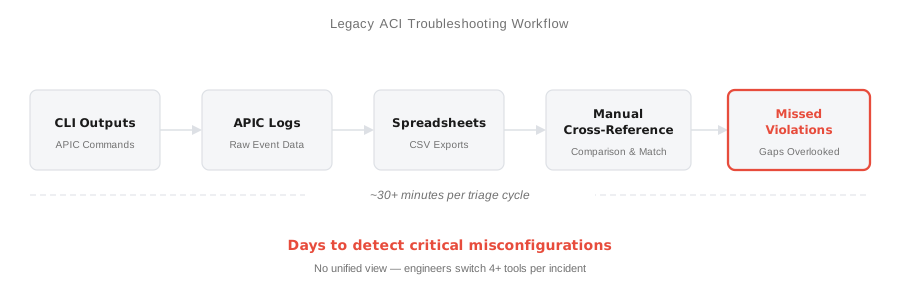
Fig 1. The legacy fragmented workflow for security compliance.
02. System Thinking
Multi-Axis Assurance
Designed a multi-axis leaderboard model surfacing compliance across five dimensions — engineers spot systemic patterns instead of chasing individual violations.
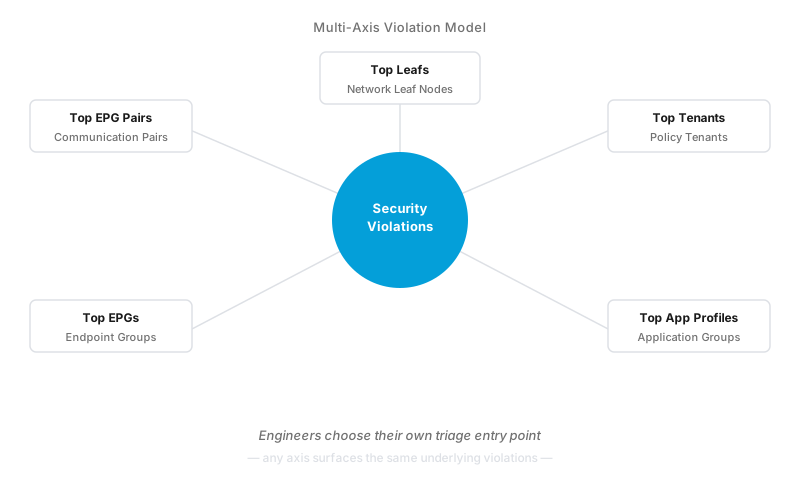
Fig 2. Multi-axis assurance leaderboard model.
03. Approach & IA
Progressive Disclosure at Scale
3-tier model: summary dashboard → event table → violation drill-down. Engineers triage at the right altitude without losing context.
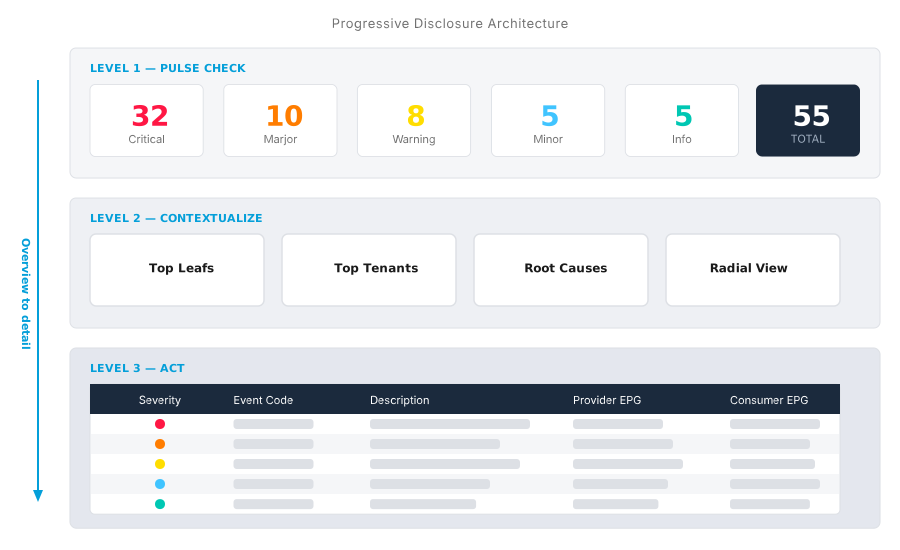
Fig 3. Three-tier progressive disclosure model.
04. Data Visualization
Making Topology Visible
Radial view for cross-tenant violations — invisible relationships between endpoints, contracts, and fabric nodes become immediately scannable.
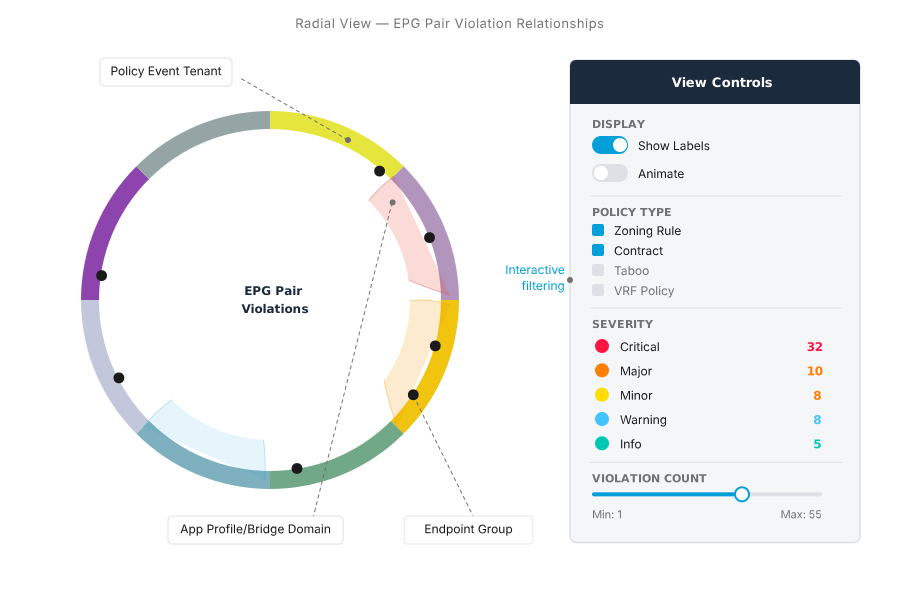
Fig 4. Radial view mapping policy violations across fabric topology.
05. Design System
CNAE Visual Style Guide
Built the design system from 0→1 for Cisco NAE.
Defining color tokens, severity standards, typography, component patterns, and interaction guidelines into a unified visual style guide.
06. Solutions
From Fragmented to Unified
Single pane of glass for violation detection, triage, and resolution — replaces the fragmented multi-tool workflow entirely.
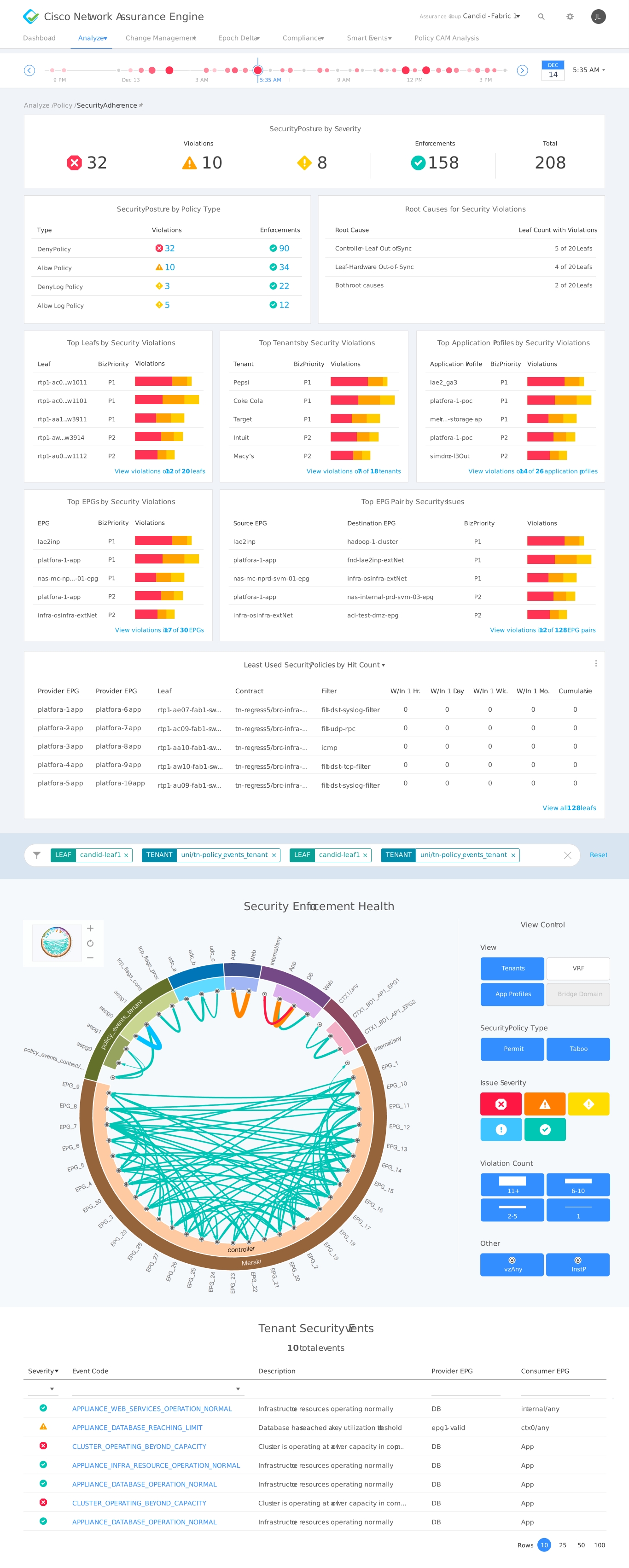
Fig 6. Unified Security Adherence Interface.
07. Key Decisions
Decisions That Shaped the Product
Four choices that defined how engineers interact with the NAE security adherence module.
Decision 1
Violations surfaced by root cause, not as flat events — engineers fix the source, not the symptom.
Decision 2
Every metric is clickable — drilling into filtered violations turns static data into navigable context.
Decision 3
Underutilized policies surfaced proactively — teams catch stale rules before they become risk.
Decision 4
Radial view over flat table — relationship patterns across tenants that tabular data would obscure.
08. Usability
Testing With Real Engineers
Usability sessions with network engineers surfaced three refinements that directly improved triage clarity and adoption.
Finding 1
Color was the primary scan signal. Refined palette to AA contrast, consistent across all chart types.
Finding 2
Default sort and columns mismatched triage patterns. Adjusted to match the most common investigation flow.
Finding 3
Multi-axis filters were powerful but buried. Promoted entry points and added persistent filter chips.
09. Impact
Measurable Outcomes
Quantified improvements across triage speed, policy coverage, enterprise adoption, and visualization capabilities.
Triage Efficiency
Violation identification speed
Coverage
Full policy coverage across tenants
Adoption
Enterprise organizations adopted
Visualization
Custom visualization components
10. Reflection
"Designing for enterprise security taught me that clarity is the product. When engineers can see the full scope of violations in one place, trust in the system rises and response times shrink. The hardest design problems were not about aesthetics — they were about making invisible relationships visible and giving operators confidence in what they are seeing."