Product
EagleEye EPP
Users
SecOps Operators
Timeline
2020 – 2023
Role
Design LeadUX Design Lead (Design Expert)
01. Challenge
Fragmented. Error-prone
A fragmented policy setup made configuration difficult to scan, easy to misconfigure, and costly to complete.
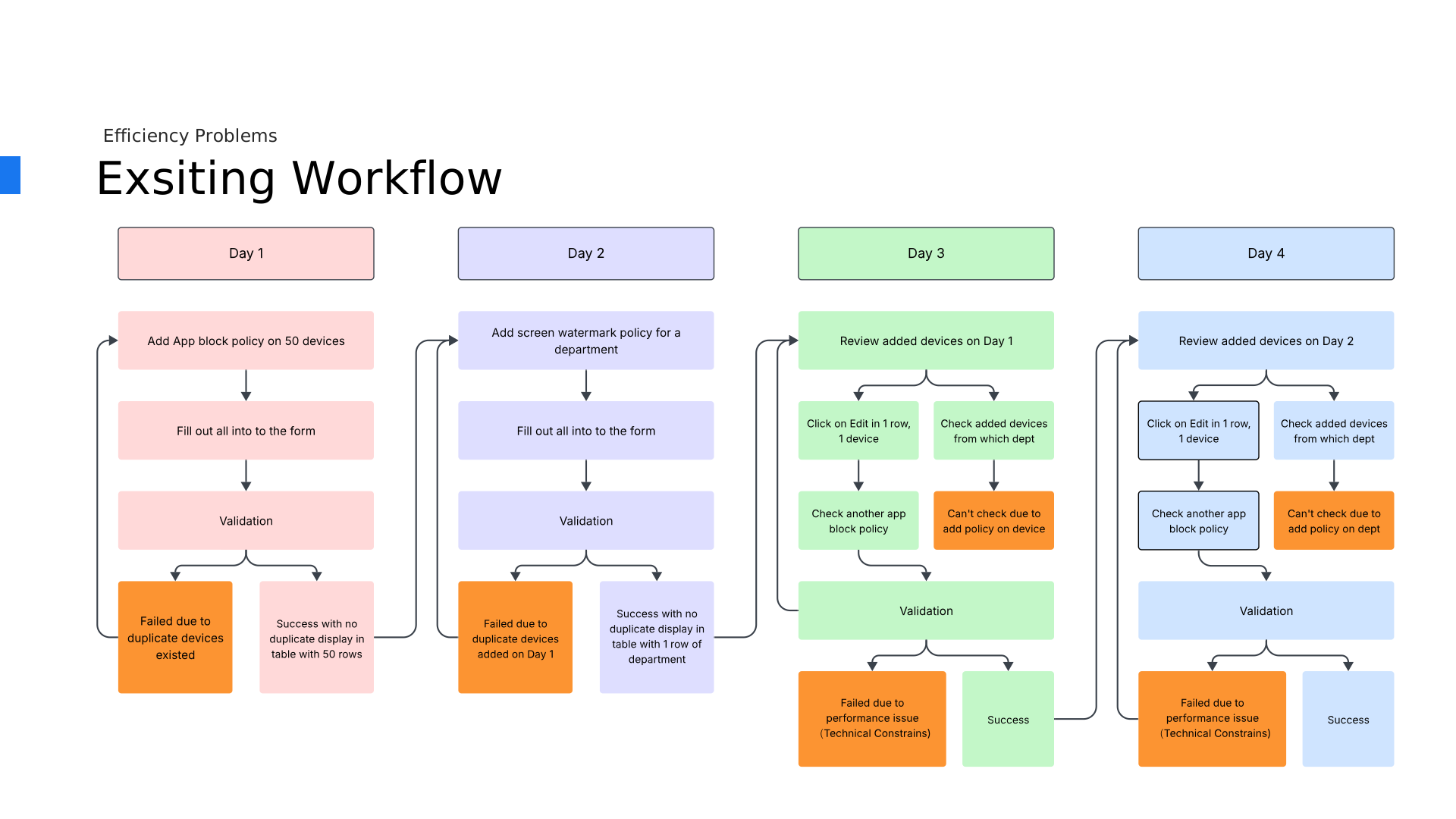
Fig 1. The legacy 4-day configuration process.
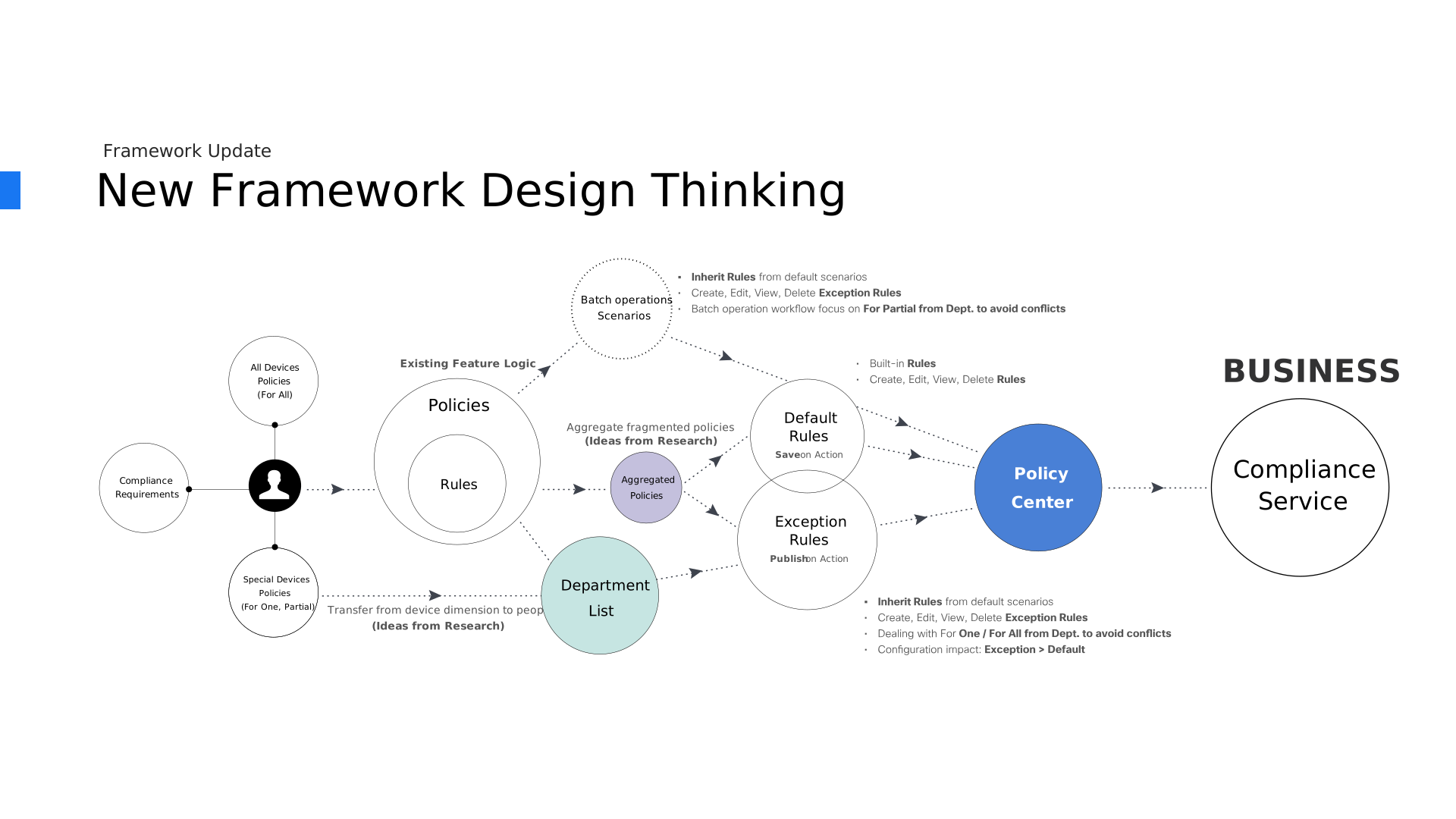
Fig 2. Device-centric vs. People-centric architecture.
02. System Thinking
Re-architecting governance
Legacy systems mapped policies to devices, causing clashes. I introduced an "Aggregated Policies" framework:
03. Approach & IA
Prioritization at scale
- UX BenchmarkingHEART model baseline (4.12).
- P0/P1/P2 CategorizationStrict element hierarchy reducing cognitive load.
- Unified HubConsolidated device IDs into departmental structures.
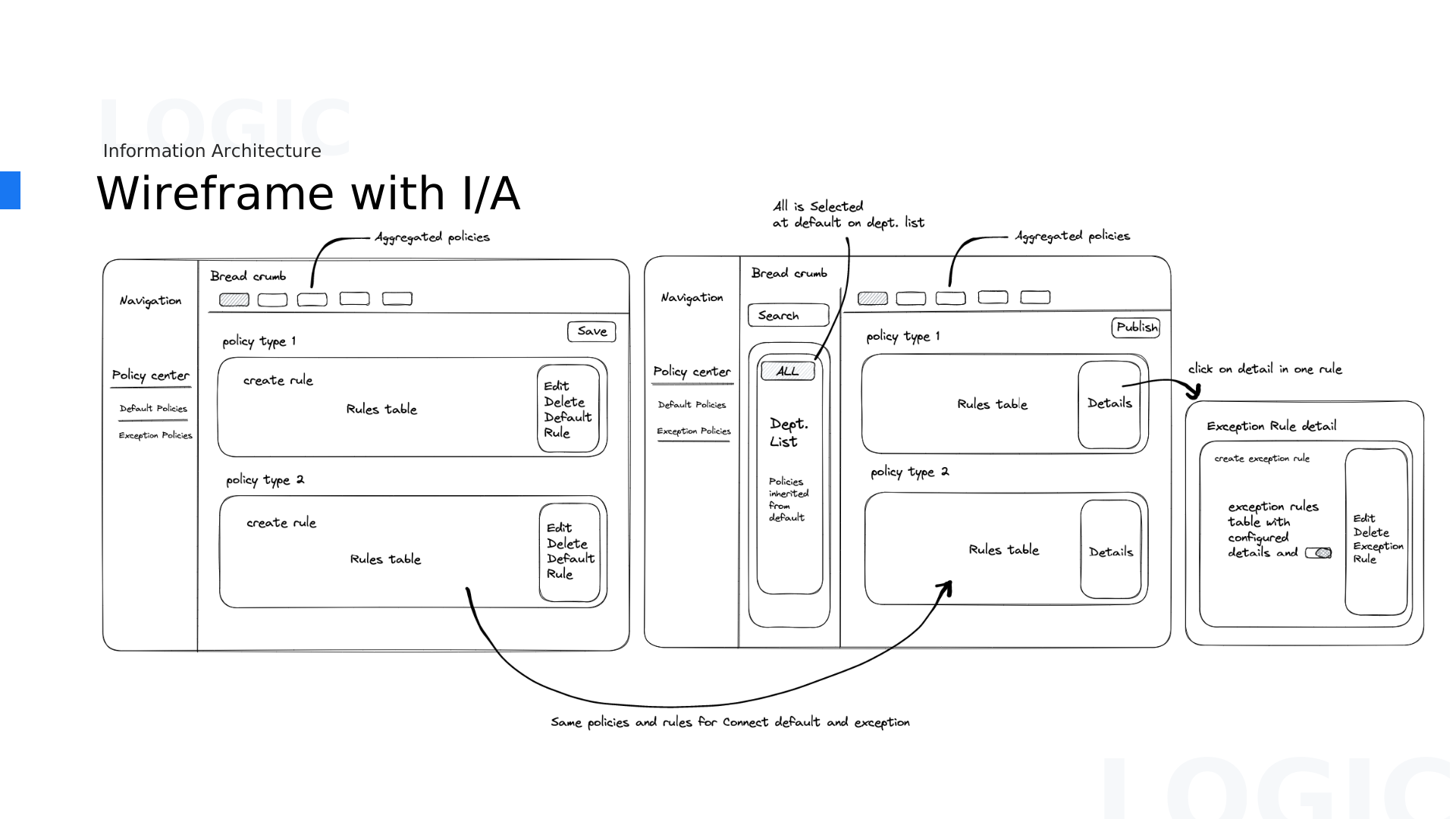
Fig 3. Wireframes defining the P0/P1/P2 hierarchy.
04. Design System
Systematized for Scale
Extended a self-authored design system across iterations to improve consistency, speed up delivery, and support more scalable product evolution.
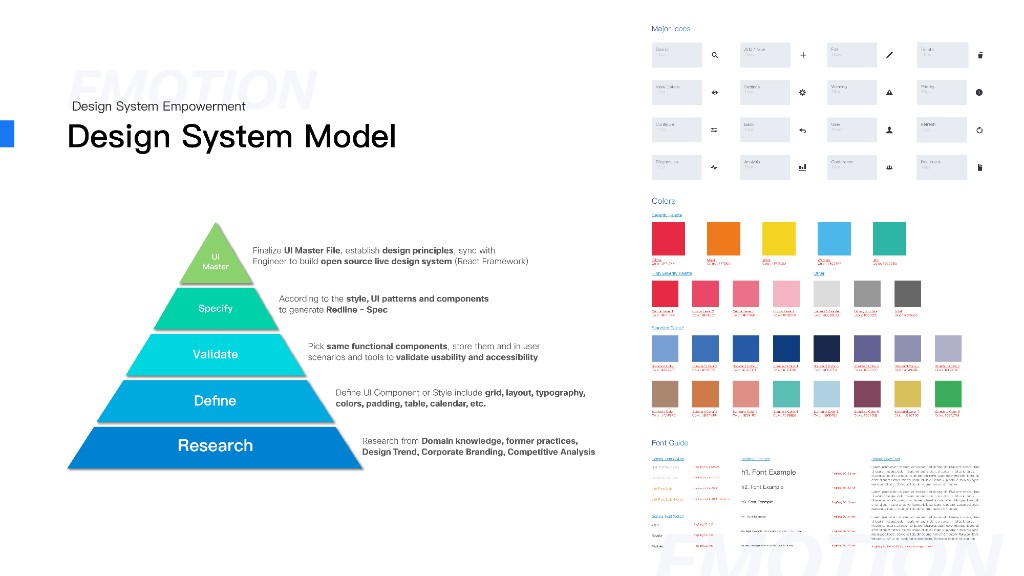
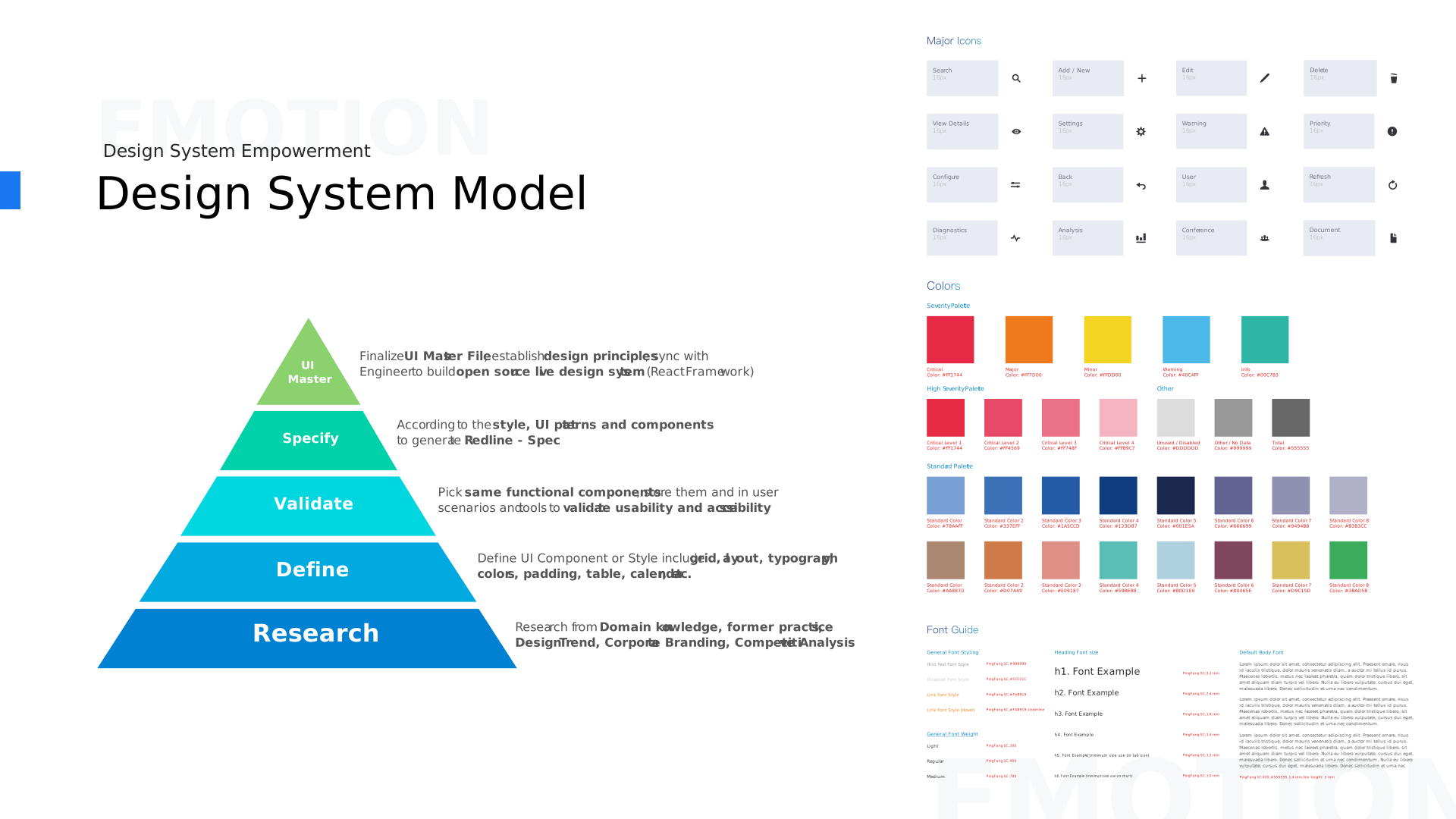
EagleEye Design System
05. Solutions
Streamlining the enterprise
Reduced policy configuration complexity to create a more scannable experience and improve administrative efficiency across devices and departments.
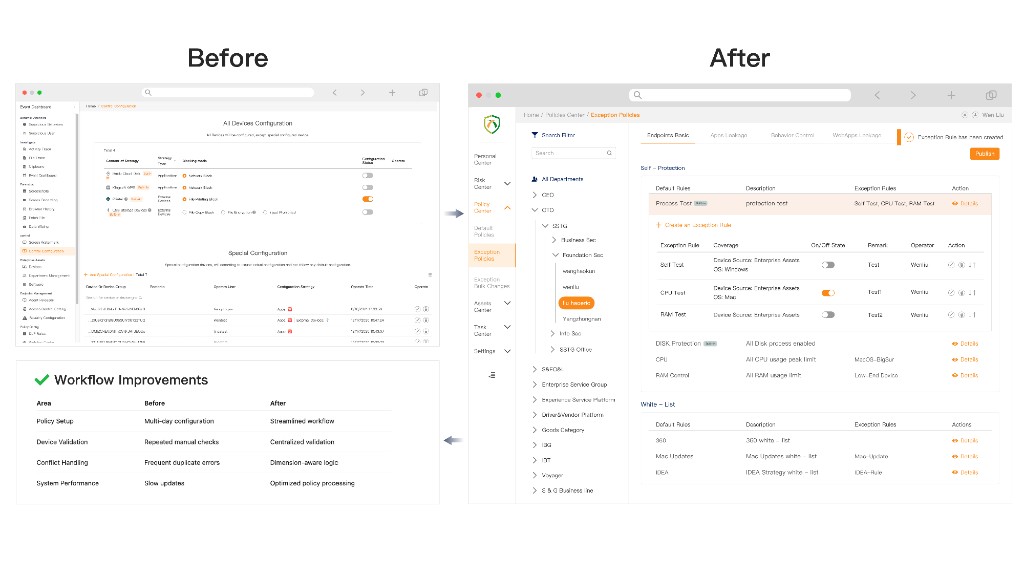
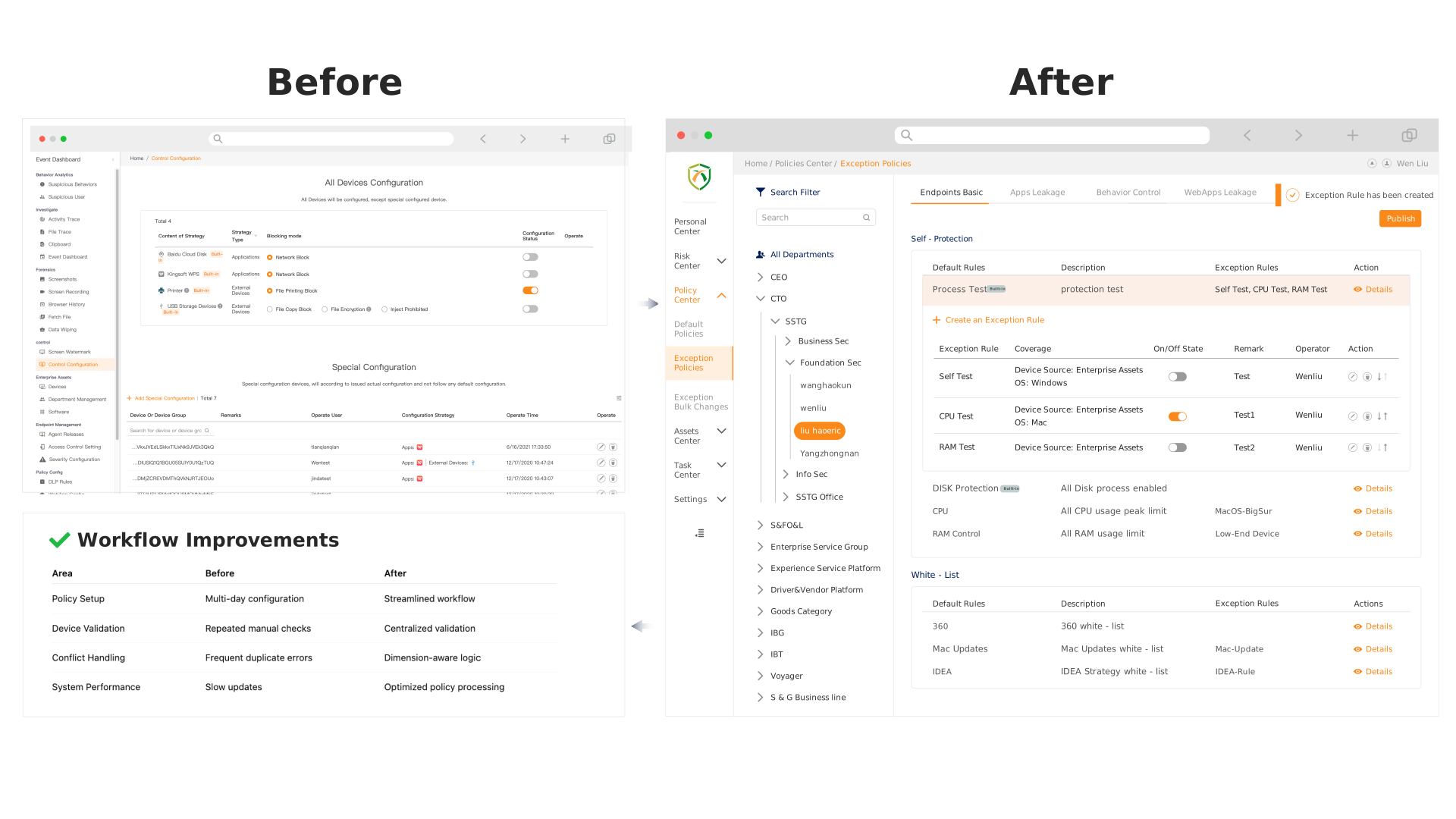
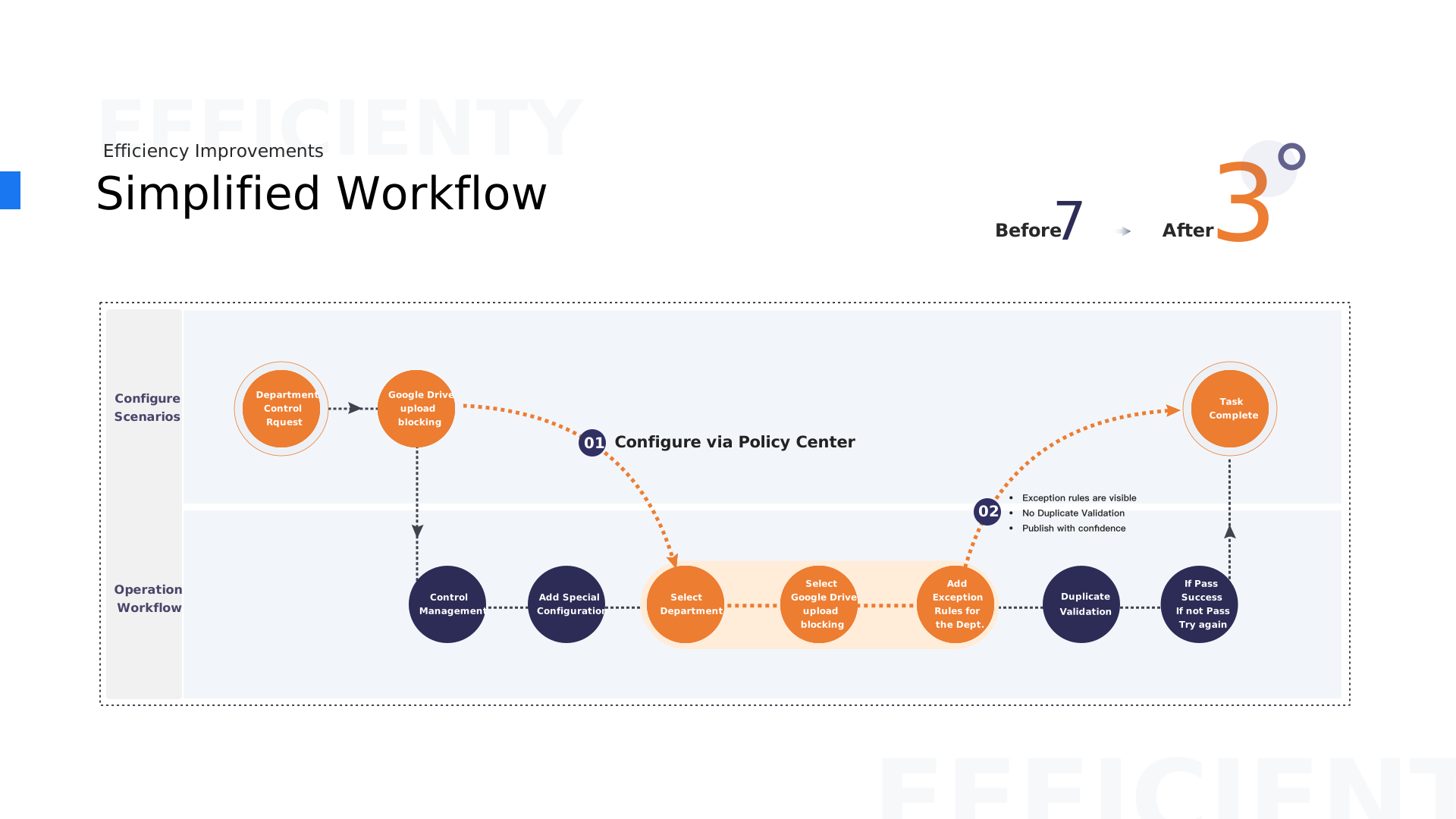
Single-session configuration flow
06. Workflow Simplification
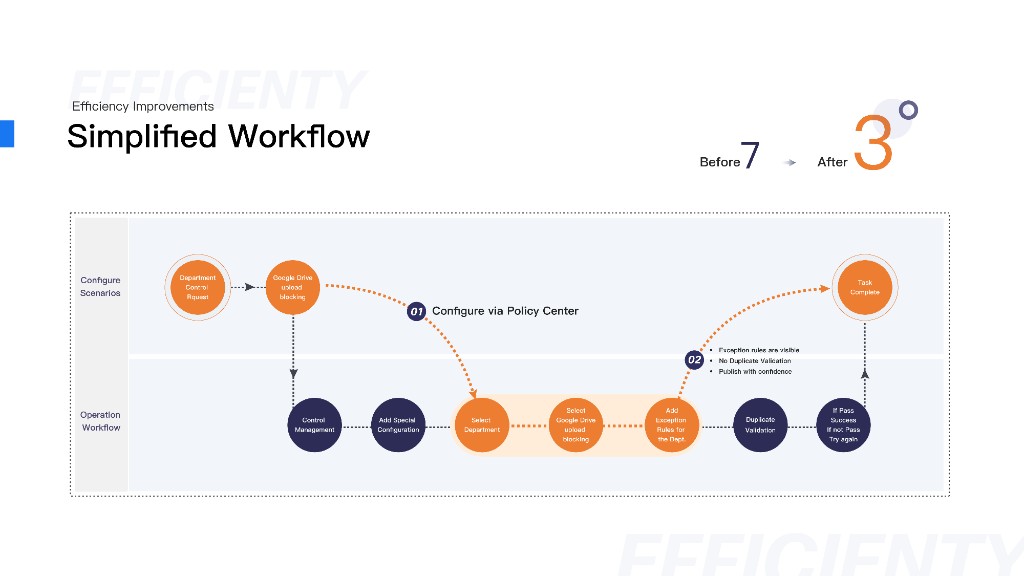
Simplifying the Flow for Operational Efficiency
Redesigned the configuration flow from 7 steps to 3, reducing interaction overhead and creating a faster, more scalable administrative experience.
07. Reframing Feedback
Reframing Feedback Through a Guided Survey Modal
Building on the Heart Modal interaction pattern, I created a more structured survey modal that improved clarity, reduced response friction, and generated more actionable feedback—raising the experience score from 4.12 to 7.48.
Foundation
Heart Modal pattern
Measured Lift
4.12 → 7.48
Design Impact
Lower friction, stronger signal
Rather than simply reusing the existing modal, I adapted the pattern into a more guided survey flow—making the interaction feel lighter for users while producing feedback that teams could actually act on.
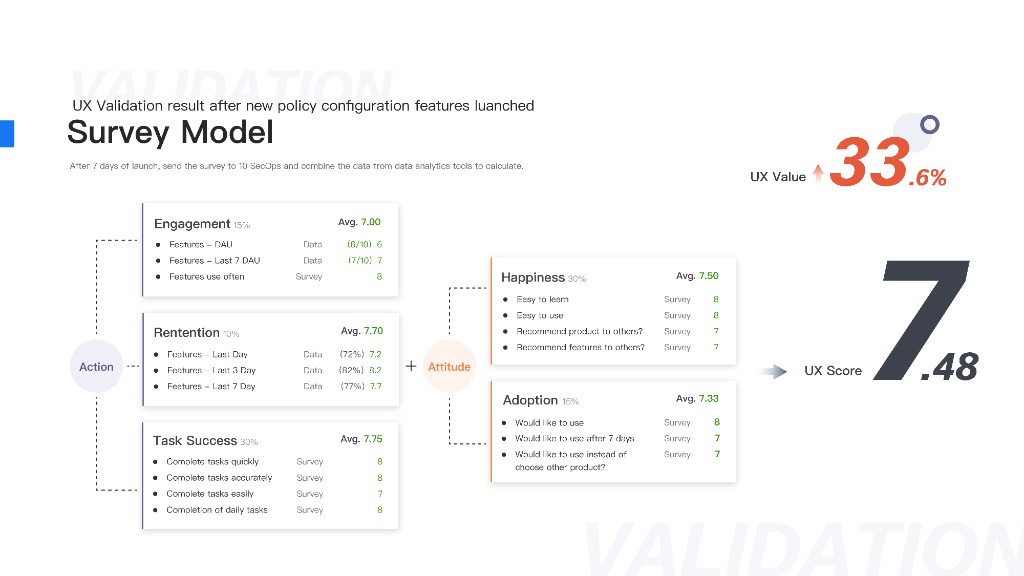
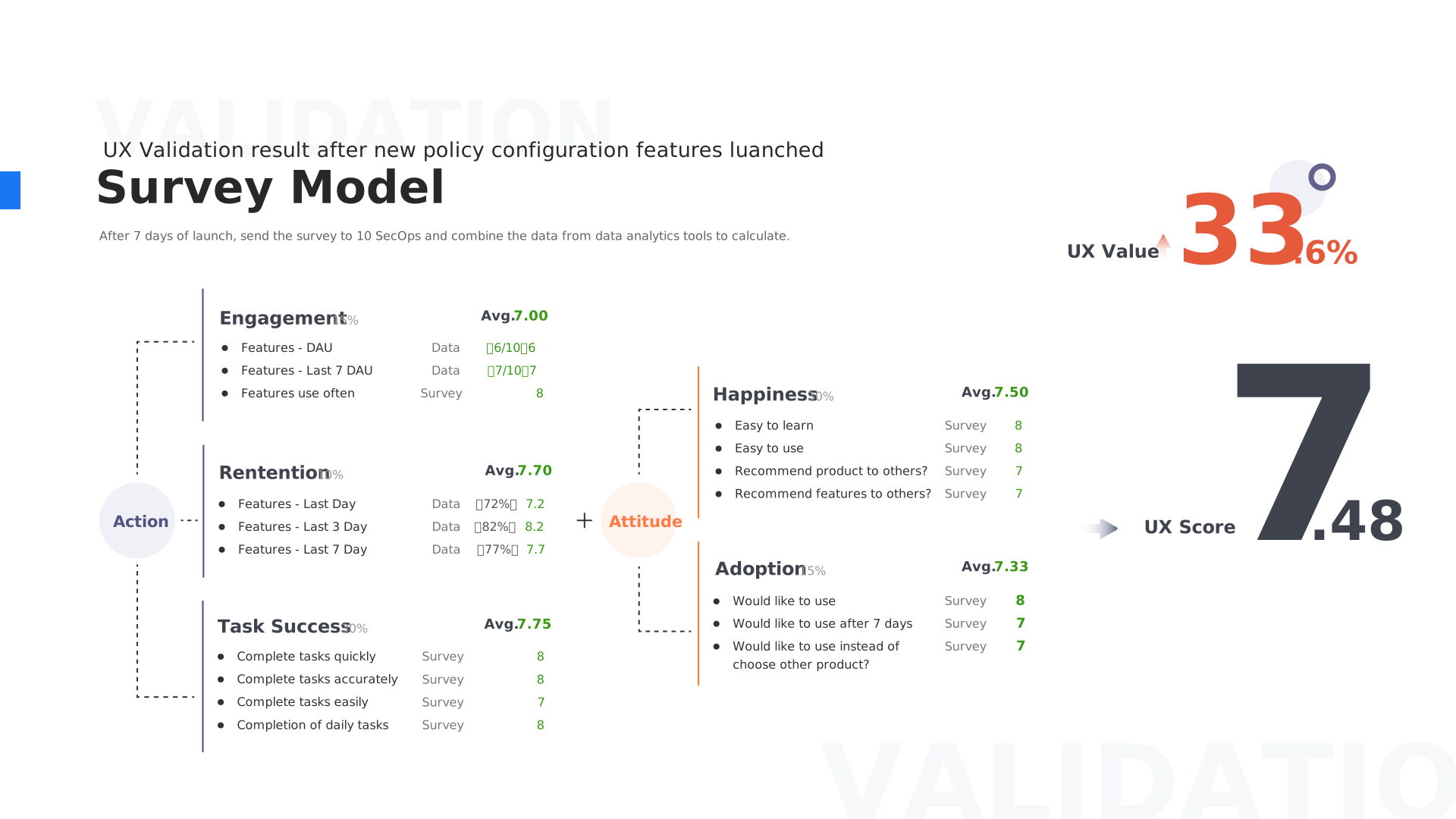
Survey Modal for UX Validation
08. System Expansion
From Strategy Center to Live Security Command
The strategy center redesign improved the product and extended its system logic into a real-time security dashboard for more dynamic, decision-ready monitoring.
Designed as a system extension, the live screen made security signals more visible, dynamic, and decision-ready.
09. Staff-Level Ownership
From Ambiguity to Validated Outcomes
Drove the work from ambiguous problem framing to validated outcomes—shaping strategy, defining reusable patterns, aligning stakeholders, and grounding decisions in data.
Strategy
Framed the problem, identified feedback gaps, and translated business needs into product direction.
Systems Thinking
Extended modal patterns into a reusable feedback framework with clearer, actionable signals.
Validation
Connected design decisions to measurable outcomes, including the score lift from 4.12 to 7.48.
10. Impact
Commercial Impact
Measurable improvements in UX score, efficiency, and error reduction across the EagleEye platform.
UX Score
4.12 → 7.48
Efficiency
20 mins → 7 mins
Error Drop
10 → 1 error per user
NPS
Net Promoter Score (0–10)
11. Reflection
"This work was a reminder that staff-level design is not just about shipping polished interfaces—it is about identifying where clarity breaks down, creating frameworks that scale, and ensuring design decisions hold up through measurable outcomes. The strongest impact often comes from redesigning the signal, not just the surface."